Tag: google ads agency

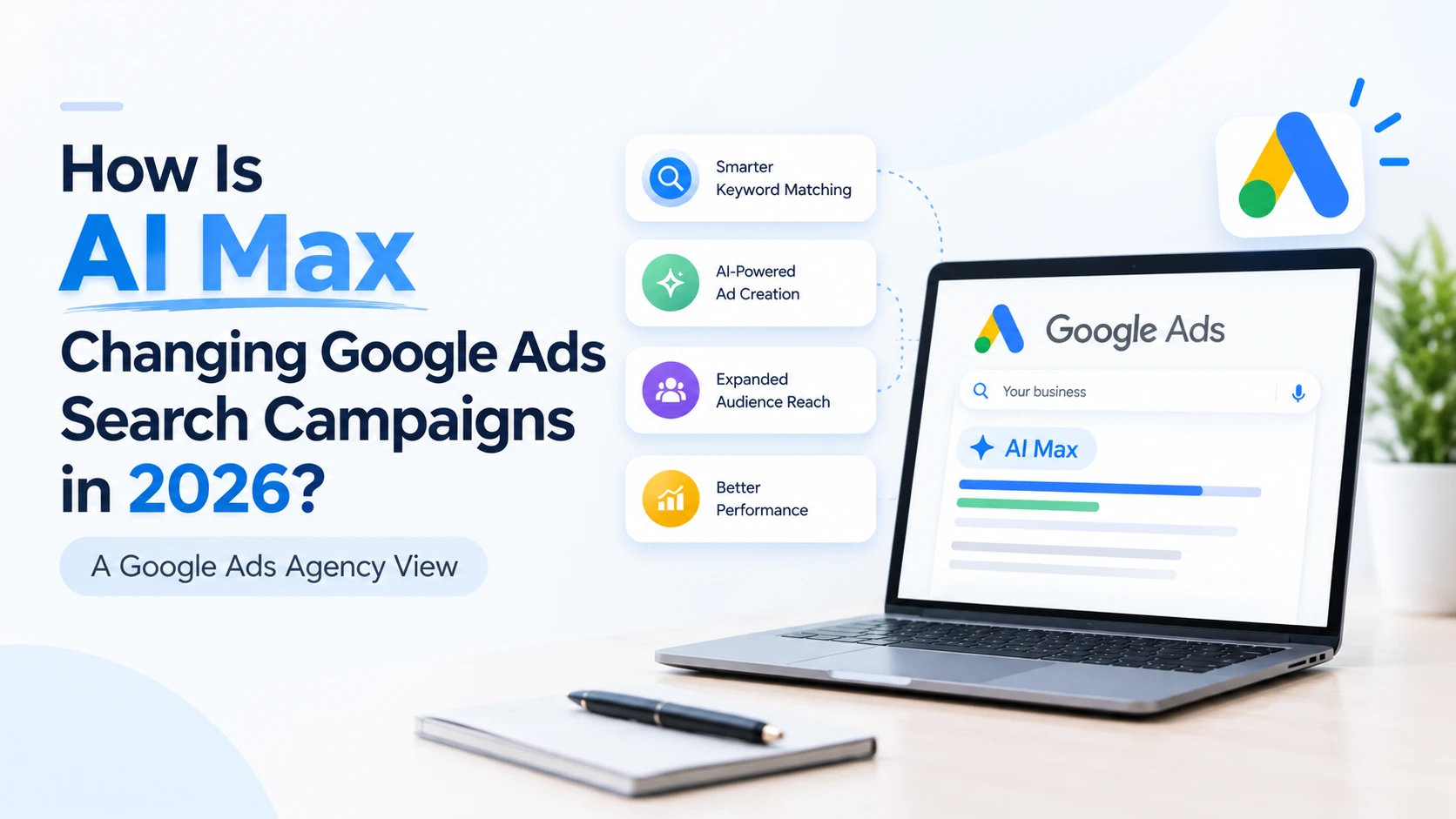
  • How Is AI Max Changing Google Ads Search Campaigns in 2026? A Google Ads Agency View

    How Is AI Max Changing Google Ads Search Campaigns in 2026? A Google Ads Agency View

    Google Ads once worked like a vending machine. You picked keywords, pressed a button, and clicks dropped out. In 2026, the machine thinks for itself. That shift comes from AI Max, and it is changing how every Google Ads agency builds, tests, and reports on Search campaigns. Here is what Google has announced, what the numbers mean, and what to do next.

    What Is AI Max for Search Campaigns?

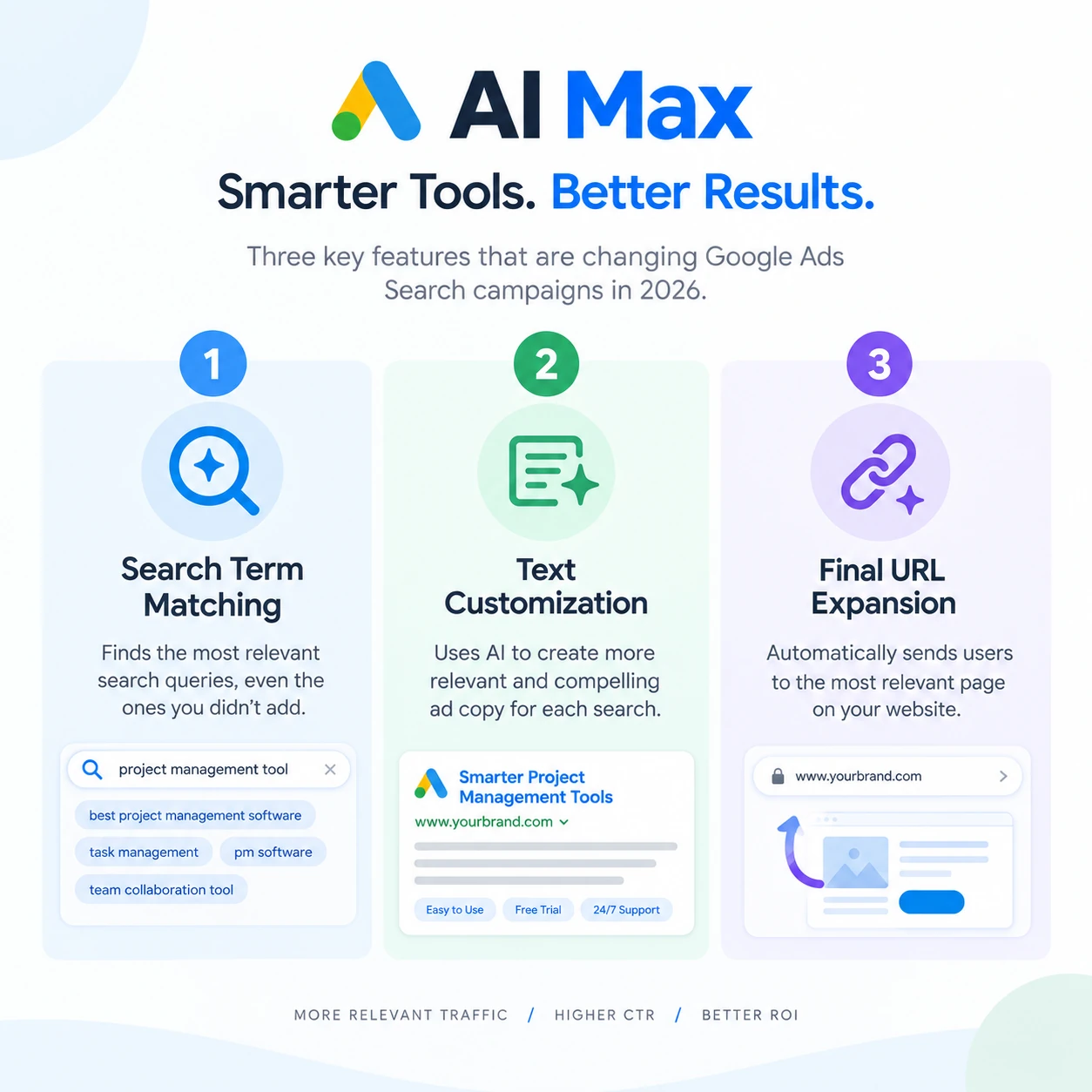
    AI Max is a set of targeting and creative features inside your existing Search campaigns. It is not a separate campaign type. Google groups it into three features: search term matching, text customization, and final URL expansion.

    Search term matching finds relevant queries beyond your keyword list. Text customization builds headlines and descriptions from your ads and website content. Final URL expansion can send a searcher to the page that fits their query best.
    Google Ads Agency Guide: How AI Max Changes Search in 2026

    What Changed in 2026?

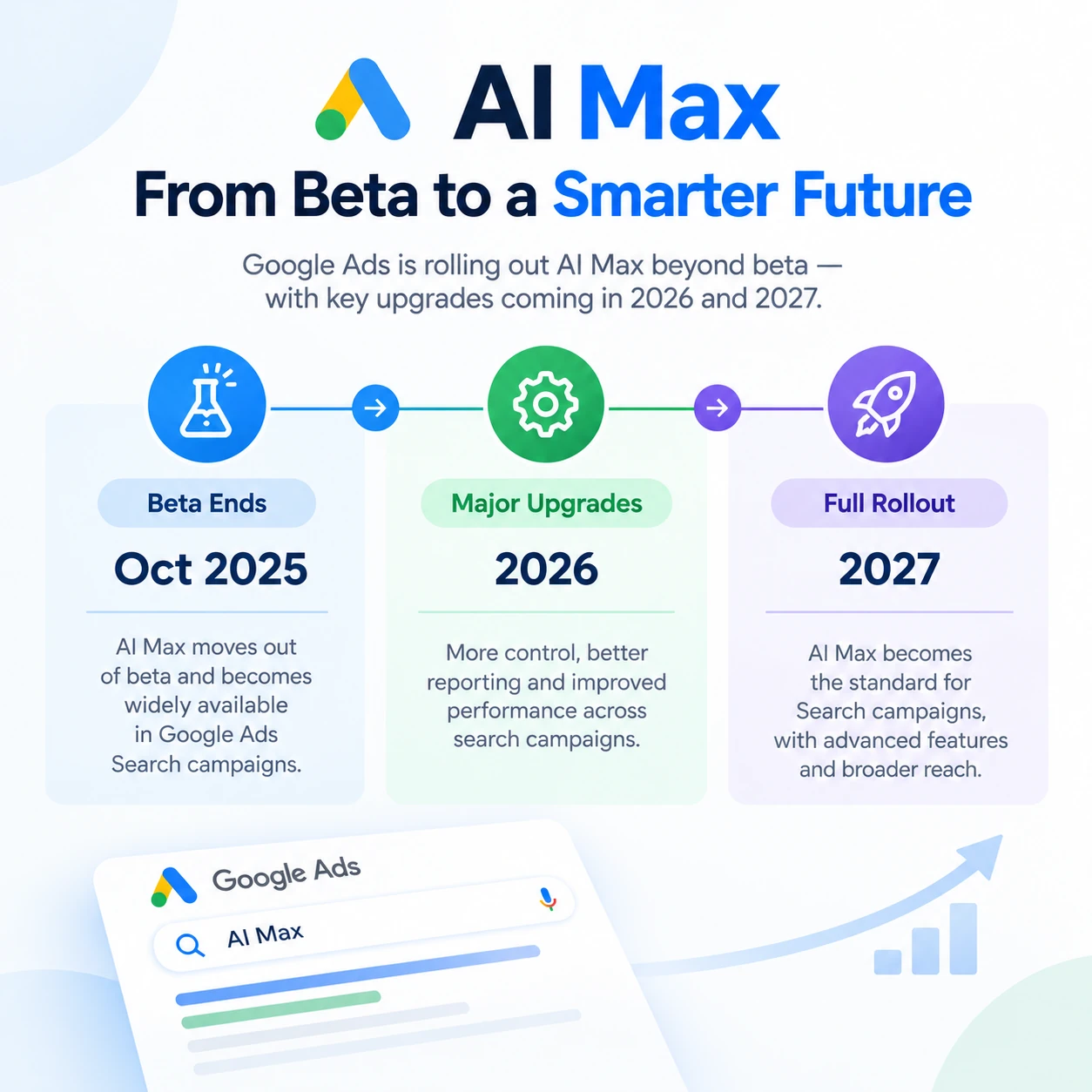
    On April 15, 2026, Google announced that AI Max is leaving beta. The same post said campaigns using automatically created assets or the campaign-level broad match setting will upgrade to AI Max starting in September 2026.

    Dynamic Search Ads got a snooze button. In a June 11 update, Google said the DSA sunset and auto-upgrade will now begin in February 2027, because advertisers asked for more time. Google also says upgraded campaigns mirror their legacy settings, so nothing should flip overnight. Still, check your account instead of trusting a banner.
    Google Ads Agency Guide: How AI Max Changes Search in 2026

    What Do the Performance Numbers Say?

    Google reports that Search campaigns using the full AI Max suite see an average of 7% more conversions or conversion value at a similar CPA or ROAS. The comparison is against campaigns using search term matching alone. Google labels it internal 2026 data for non-retail advertisers.

    Read that fine print twice. It does not promise a 7% lift over your current setup. Google’s 2025 launch messaging cited a 14% average lift, and the two figures use different comparisons. Treat both as directional, then test your own account.

    Controls to Set Before AI Max Goes Live

    Automation is fun until it spends your budget on the wrong searches. Google points to brand controls, location controls, and text guidelines as your steering wheel. Use them.

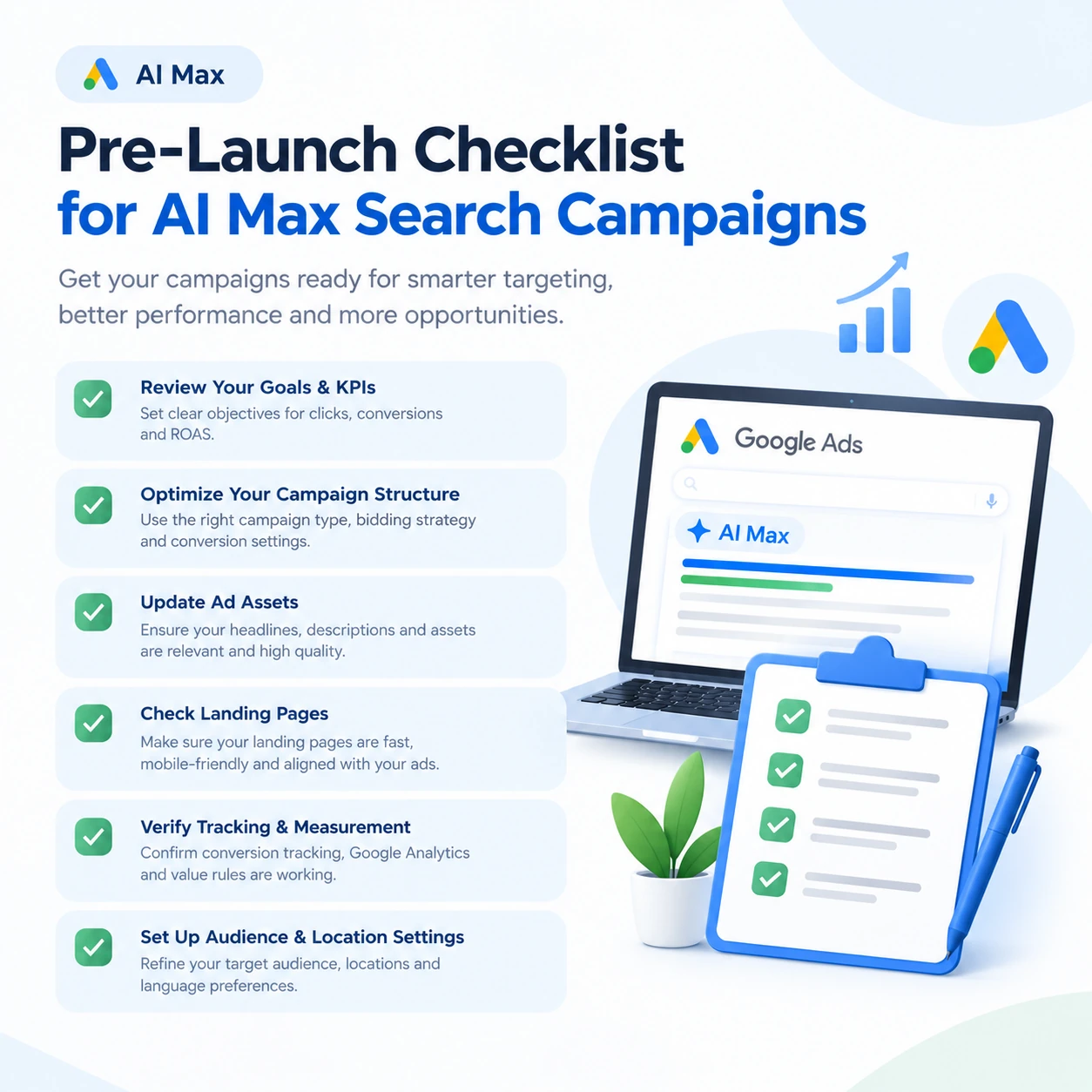
    A quick pre-launch checklist:

    • Review your search terms report and negative keywords.
    • Set brand and location controls.
    • Write text guidelines that match your tone and claims.
    • Check your landing pages, since final URL expansion may send traffic to them.
    • Run a one-click experiment against your current setup.

    Any agency Google Ads work depends on should hand you a test plan, not a hunch. Data beats opinions, including ours.
    Google Ads Agency Guide: How AI Max Changes Search in 2026

    How a Google Ads Agency Helps You Handle AI Max

    AI Max rewards clean inputs. Strong conversion tracking, clear goals, and sharp ad copy give the AI better signals. A skilled Google Ads agency audits those basics first, then runs controlled tests, then reports what moved. That order matters. Skipping the audit is like giving a GPS the wrong starting address.

    Reporting matters too. Ask for reports that tie search terms and landing pages to leads or sales, not just clicks.

    Choosing the Best Google Ads Agency in India

    Searching for the best Google Ads agency in India can feel like picking a mango at a crowded market. Everyone says theirs is the sweetest. Skip anyone who guarantees results, because nobody controls a Google auction.

    Ask better questions. How do you test AI Max? Which controls do you set first? How often do you report? Whether you hire a Google Ads agency in India or overseas, clear answers beat big promises.

    About Revelar Solutions

    Revelar Solutions is a digital engineering and marketing studio headquartered in Lucknow, with a presence in Delhi. The team serves clients across India and the USA. If you want a Google Ads agency in Delhi that also understands websites, content, and SEO, Revelar brings those skills together. Explore the Google Ads management services to see how the team approaches Search campaigns.

    Final Thoughts

    AI Max does not replace strategy. It rewards good strategy and exposes weak setups quickly. Set your controls, run your tests, and keep a human in charge. The machine is smart, but it still doesn’t know your margins.
  • How Performance Max Is Transforming Google Ads in 2026

    How Performance Max Is Transforming Google Ads in 2026

    Most advertisers have stopped asking what Performance Max is. The real question in 2026 is different: should more of the budget move into it, or has it already gone too far? Every business considering a google ads agency to manage this decision runs into the same answer it depends on the account, not on a platform-wide rule.

    That’s an unsatisfying answer for anyone hoping for a simple yes or no, but it’s the honest one. Performance Max behaves differently depending on how much conversion history an account has, how strong its creative assets are, and how much visibility a team is willing to give up in exchange for automation.

    Google Ads Performance Max campaignPerformance Max

    What “Transforming” Actually Means

    The shift isn’t about a flashy new feature. It’s about where budget physically flows. Instead of running separate Search, Shopping, Display, and YouTube campaigns with their own budgets and bid strategies, Performance Max pools everything into one automated system that allocates spend across channels based on where it predicts conversions will happen.

    That consolidation trades away granular, campaign-by-campaign control. An advertiser can no longer decide, with precision, how much goes to Search versus Display on a given day. In exchange, the system gains the ability to shift budget across channels in real time, chasing conversions wherever they’re most likely to occur. Google has also expanded reporting around this over the past year, adding channel-level and asset-level visibility that didn’t exist when Performance Max first launched, which has softened though not eliminated the original transparency complaint.

    Whether that trade is worth it depends entirely on what an account looked like before the switch.

    Where the Shift Has Genuinely Paid Off

    Accounts With Strong Existing Data and Creative Assets

    Performance Max learns from signals: past conversions, audience behavior, and the quality of the images, headlines, and video assets fed into it. Accounts that already had months of clean conversion data and a solid library of creative assets tend to see the algorithm ramp up faster and make more sensible allocation decisions. The system has more to work with, so its guesses are better guesses.

    Retail and Shopping-Heavy Accounts

    For ecommerce businesses with a product feed, Performance Max is a natural fit. It was built to promote inventory across Search, Shopping, Display, and YouTube simultaneously, which suits retailers who want their catalog surfaced wherever a shopper might be looking, rather than confined to a single placement type.

    Under-Resourced Cross-Channel Coordination

    Some teams were never coordinating Search, Shopping, and Display budgets particularly well in the first place — not enough hours in the week, not enough staff to manage four campaign types by hand. In those cases, automation isn’t replacing a finely tuned manual process; it’s filling a gap that was already there. The comparison isn’t “AI versus a skilled human,” it’s “AI versus nothing.”

    Where the Shift Has Been Overstated or Risky

    Thin Conversion Data

    An account with a handful of monthly conversions gives the algorithm very little to learn from. Performance Max needs data to calibrate its predictions, and without enough of it, spend allocation can be inconsistent and slow to stabilize. Businesses in this position sometimes see the opposite of what a google adwords agency would recommend when data volume is low patience and manual structure often outperform full automation in the early stages.

    Niche or Regulated Verticals

    Industries like healthcare, finance, legal services, or anything with strict advertising compliance rules face a real risk with broad automated targeting. Performance Max’s placement decisions aren’t always easy to audit in advance, and for verticals where a single inappropriate placement or misleading impression carries regulatory weight, that lack of granular control is a legitimate concern, not just an inconvenience.

    Losing Channel-Level Justification

    Even when aggregate performance holds up, some teams struggle internally when they can no longer show a finance department or a client exactly how much was spent on Search versus Display and what each channel returned. Reporting has improved, but it hasn’t fully replaced the clarity of separate, dedicated campaigns for organizations that need to justify spend channel by channel.

    How to Decide if It’s Right for Your Account

    Three checks tend to be more useful than general advice:

    • Data volume: Does the account have enough historical conversions for the algorithm to actually learn from, or would it be starting nearly cold?
    • Reporting tolerance: Can the team live with less granular, channel-by-channel visibility in exchange for potentially better aggregate results?
    • Creative readiness: Are there enough strong, varied assets images, headlines, video to give the system real options, or would it be working with a thin, repetitive set?

    If the answer to most of these leans positive, expanding Performance Max investment is worth testing. If not, it may be worth holding the current campaign structure a while longer before shifting more budget.

    The Bottom Line

    Performance Max isn’t universally good or universally overhyped it performs differently depending on the account behind it, and treating it as a platform-wide best practice ignores that variation. The right amount of investment for one business might be the wrong amount for another with thinner data or tighter compliance needs. If you’re weighing this decision for your own account, working with a team that treats it as an account-specific question rather than a default recommendation matters more than the platform trend itself. For businesses in India navigating this shift, working with the best google ads agency in india often comes down to finding a team willing to run that account-specific assessment before recommending a budget change, rather than applying the same playbook to every client.